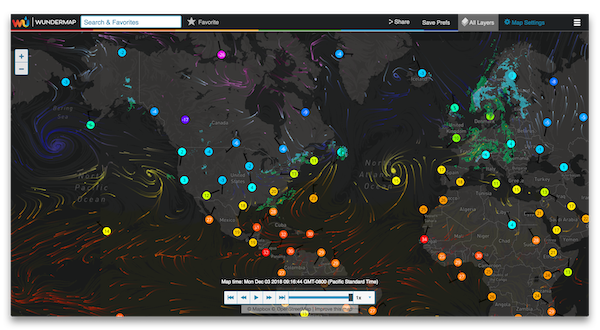
The RAINcast map shows forecasted
precipitation for the next 24 hours at 6 hour intervals. The map for each intervable is available within the drop-down menu. Each color-coded map shows predicted accumulation measured in hundredths of inches.
Rain is a type of
precipitation, a product of the condensation of atmospheric
water vapor that is deposited on the Earth's surface. It forms when separate drops of water fall to the Earth from
clouds. Not all rain reaches the
surface; some evaporates while falling through dry air. When none of it reaches the ground, it is called virga, a phenomenon often seen in hot, dry desert regions.
Rain plays a role in the hydrologic cycle in which moisture from the oceans evaporates, condenses into drops, precipitates (falls) from the
sky, and eventually returns to the ocean via rivers and streams to repeat the cycle again. The
water vapor from
plant respiration also contributes to the
moisture in the atmosphere.
A major scientific explanation of how rain forms and falls is called the Bergeron process. More recent research points to the influence of
Cloud condensation nuclei released as the result of biological processes.