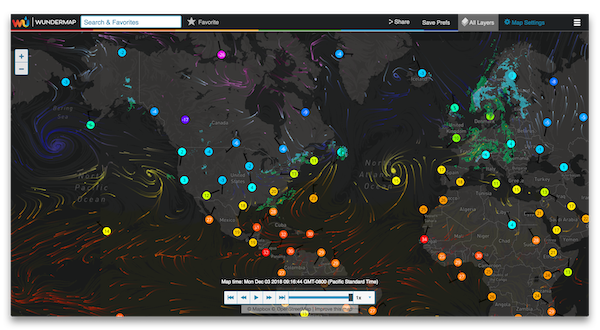
Sharing a common border throughout its northern extent with the United States, Mexico is bounded on the west and south by the Pacific Ocean, to the east by the Gulf of Mexico and the Caribbean Sea, and on the southeast by Guatemala and Belize. Roughly triangular in shape, Mexico covers an area of 756,066 square miles. While it is more than 1,850 miles across the country from northwest to southeast, the width varies from less than 135 miles at the Isthmus of Tehuantepec to more than 1,200 miles in the north.
Mexico has a vast wealth of mineral resources, a limited amount of agricultural land, and a rapidly growing population. More than half of the people live in the central core, while vast areas of the arid North and the tropical South are sparsely settled.
Well over half of this rugged but beautiful country is high terrain, either mountains or plateau. The country has a rather sunny but otherwise highly-varied climate.
The northwestern coast of Mexico, extending down to the tip of Baja, California, has an arid climate not unlike that of the southwestern United States, thanks to the cold California Current.
On the eastside of Mexico, the warm waters of the Caribbean Sea and Gulf of Mexico, together with the prevailing northeast trade winds, bring a tropical climate with distinct summer rainfall.
In the northeastern part of the country near the United States border, winter can bring occasional "northers" that bring cold temperatures and even on occasions some snow. Snow can even fall as far south as Tampico, which lies within the tropics. On December 12, 1997, an extremely rare, major snowstorm occurred in northeast Mexico. Snow was even reported down to 600-700 feet elevation near the Tropic of Cancer. During this storm’s scenario, Monterrey, Mexico was 95 degrees on Tuesday and 82 degrees on Wednesday. Then a "norther" blew in with rapidly falling temperatures (on Thursday, Dec. 12) which was followed by moderate snow on Friday morning. Some locations in northeastern and central Mexico that never before saw snow, received 6-12 inches of accumulation with 1 to 2 feet at higher elevations!
Tropical systems in both the eastern Tropical Pacific and the Atlantic Basin/Caribbean can affect Mexico. Tropical systems forming in the eastern Tropical Pacific pose a threat to the Southwestern and Western Coast. They typically do the most damage to the South and Southwest Coast. If these storms take a more northerly track, they often weaken as they move over cooler water (warm water increases a storm’s intensity). In El Nino years however, the water along the West Coast tends to be warmer, therefore storms gather energy and pose a much more significant threat to the North Coast. In La Nina summers, the water tends to be cooler than normal along the far eastern Pacific, thus the number and strength of tropical storms decreases.
On the Caribbean and Gulf of Mexico side, tropical storms and hurricanes feed off of very warm water and therefore are very powerful when they make landfall. The hurricane seasons here tend to be most active during La Nina years and least active during El Nino years, which is the opposite of the situation in the Pacific.
As indicated, much of Mexico is sunny much of the year. Low clouds and fog can affect the coastal areas on the Northwest Coast, thanks to the cold California Current. The wetter parts of the Mexican East Coast are also rather cloudy.
| Month |
Record Low |
Normal Low |
Normal High |
Record High |
Average # Rain Days |
Average Rainfall |
| January |
27°F -3°C
|
42°F 6°C
|
66°F 19°C
|
74°F 23°C
|
4 |
0.5 inches 13 mm |
| February |
29°F -2°C
|
43°F 6°C
|
69°F 21°C
|
81°F 27°C
|
5 |
0.2 inches 5 mm |
| March |
34°F 1°C
|
47°F 8°C
|
75°F 24°C
|
84°F 24°C
|
9 |
0.4 inches 10 mm |
| April |
33°F 1°C
|
51°F 11°C
|
77°F 25°C
|
90°F 32°C
|
14 |
0.8 inches 20 mm |
| May |
43°F 6°C
|
54°F 12°C
|
78°F 26°C
|
89°F 32°C
|
17 |
2.1 inches 53 mm |
| June |
49°F 9°C
|
55°F 13°C
|
76°F 24°C
|
87°F 31°C
|
21 |
4.7 inches 119 mm |
July
|
47°F 8°C
|
53°F 12°C
|
73°F 23°C
|
83°F 28°C
|
27 |
6.7 inches 170 mm |
| August |
49°F 9°C
|
54°F 12°C
|
73°F 23°C
|
81°F 27°C
|
27 |
6.0 inches 152 mm |
| September |
34°F 1°C
|
53°F 12°C
|
74°F 23°C
|
78°F 26°C
|
23 |
5.1 inches 130 mm |
| October |
35°F 2°C
|
50°F 10°C
|
70°F 21°C
|
78°F 26°C
|
13 |
2.0 inches 51 mm |
| November |
36°F 2°C
|
46°F 8°C
|
68°F 20°C
|
77°F 25°C
|
6 |
0.7 inches 18 mm |
| December |
32°F 0°C
|
43°F 6°C
|
66°F 19°C
|
73°F 23°C
|
4 |
0.3 inches 8 mm |
ACAPULCO
Acapulco is a popular winter resort on the Tropical Pacific Coast of Mexico, known for its fine beaches, luxury hotels and villas, and deep-sea fishing.
| Month |
Record Low |
Normal Low |
Normal High |
Record High |
Average # Rain Days |
Average Rainfall |
| January |
52°F 11°C
|
72°F 22°C
|
88°F 31°C
|
97°F 36°C
|
1 |
0.2 inches 6 mm |
| February |
64°F 18°C
|
72°F 22°C
|
88°F 31°C
|
97°F 36°C
|
0 |
0.0 inches 1 mm |
| March |
64°F 18°C
|
72°F 22°C
|
88°F 31°C
|
100°F 38 °C
|
0 |
0.0 inches 0 mm |
| April |
64°F 18°C
|
73°F 23°C
|
90°F 32°C
|
99°F 37°C
|
0 |
0.0 inches 1 mm |
| May |
68°F 20°C
|
77°F 25°C
|
90°F 32°C
|
106°F 41°C
|
3 |
1.4 inches 36 mm |
| June |
70°F 21°C
|
77°F 25°C
|
91°F 33°C
|
99°F 37°C
|
13 |
11.1 inches 281 mm |
July
|
70°F 21°C
|
77°F 25°C
|
90°F 32°C
|
100°F 38°C
|
14 |
10.1 inches 256 mm |
| August |
70°F 21°C
|
77°F 25°C
|
90°F 32°C
|
99°F 37°C
|
13 |
9.9 inches 252 mm |
| September |
68°F 20°C
|
75°F 24°C
|
90°F 32°C
|
99°F 37°C
|
16 |
13.8 inches 349 mm |
| October |
70°F 21°C
|
75°F 24°C
|
90°F 32°C
|
99°F 37°C
|
9 |
6.3 inches 159 mm |
| November |
66°F 19°C
|
73°F 23°C
|
90°F 32°C
|
99°F 37°C
|
2 |
1.1 inches 28 mm |
| December |
52°F 11°C
|
72°F 22°C
|
88°F 31°C
|
106°F 41°C
|
1 |
0.3 inches 8 mm |