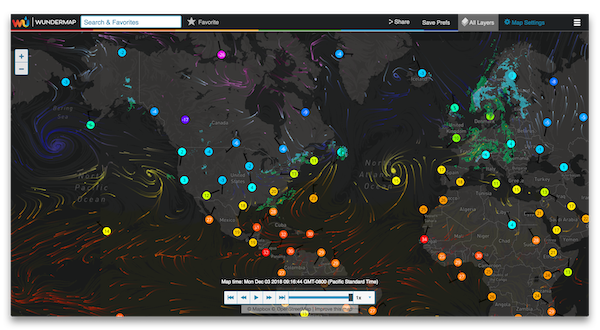
The THUNDERcast map shows areas of probability for thunderstorms for the
next 48 hours. Thunder is the sound made by
lightning. Depending on the nature of the
lightning and distance of the hearer, it can range from a sharp, loud crack to a long, low rumble. The sudden increase in pressure and temperature from
lightning produces rapid expansion of the air surrounding and within a bolt of
lightning. In turn, this expansion of air produces a sonic shock wave which produces the sound of thunder.
The cause of thunder has been the subject of centuries of speculation and scientific inquiry. The first recorded theory is attributed to the Greek philosopher Aristotle in the third century BC, and an early speculation was that it was caused by the collision of clouds. Subsequently, numerous other theories have been proposed. By the mid-19th century, the accepted theory was that
lightning produced a vacuum. In the 20th century a consensus evolved that thunder must begin with a shock wave in the air due to the sudden thermal expansion of the plasma in the
lightning channel. In a fraction of a second the air is heated to a temperature approaching 28,000°C (50,000°F). This heating causes it to expand outward, plowing into the surrounding cooler air at a speed faster than sound would travel in that cooler air. The outward-moving pulse that results is a shock wave, similar in principle to the shock wave formed by an explosion, or at the front of a supersonic aircraft. More recently, this consensus has been eroded by the observation that measured overpressures in simulated
lightning are greater than what could be achieved by the amount of heating found. Alternative proposals rely on electrodynamic effects of the massive current acting on the plasma in the bolt of
lightning.