Skip Navigation Links
LocalExpand Local
NationalExpand National
GlobalExpand Global
StormsExpand Storms
HealthExpand Health
TravelExpand Travel
CommunityExpand Community
Skip Navigation Links
  Help Hurricanes Alerts
24hr Tropical Winds
Send this page to a friend
Related Weather Maps
Current Radar
Current Radar
National Infrared Satellite
Infrared Satellite
Forecast Radar
Forecast Radar
Today's Forecast
Today's Forecast
Radar Summary
Radar Summary
Severe Outlook Today
Severe Weather Outlook
Current Surface Analysis
Surface Analysis
Lightning Strikes
Lightning Strikes
Daily Precipitation
Daily Precip
Interactive Map
Interactive Map (BETA)
Advertisement
24hr Tropical Winds  
24hr Tropical Winds
Learn about 24hr Tropical Winds View Detailed Information »
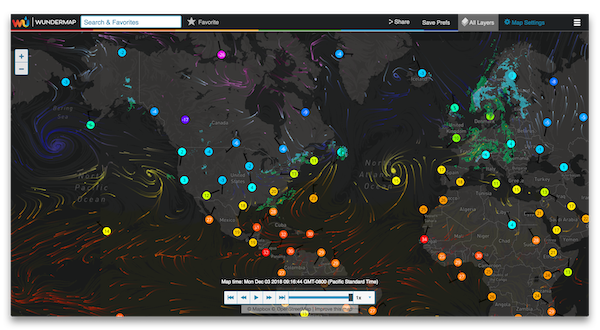
The Hurricane Tropical Winds map shows high level (about 40,000 feet) wind speed and direction over the Atlantic Ocean. A tropical cyclone is a storm system characterized by a low pressure center and numerous thunderstorms that produce strong winds and flooding rain. A tropical cyclone feeds on the heat released when moist air rises and the water vapor it contains condenses. They are fueled by a different heat mechanism than other cyclonic windstorms such as nor'easters, European windstorms, and polar lows, leading to their classification as 'warm core' storm systems.

The term "tropical" refers to both the geographic origin of these systems, which form almost exclusively in tropical regions of the globe, and their formation in Maritime Tropical air masses. The term "cyclone" refers to such storms' cyclonic nature, with counterclockwise rotation in the Northern Hemisphere and clockwise rotation in the Southern Hemisphere. Depending on their location and strength, tropical cyclones are referred to by other names, such as hurricane, typhoon, tropical storm, cyclonic storm, tropical depression and simply cyclone.

While tropical cyclones can produce extremely powerful winds and torrential rain, they are also able to produce high waves and damaging storm surge. They develop over large bodies of warm water, and lose their strength if they move over land. This is the reason coastal regions can receive significant damage from a tropical cyclone, while inland regions are relatively safe from receiving strong winds. Heavy rains, however, can produce significant flooding inland, and storm surges can produce extensive coastal flooding up to 40 kilometres (25 mi) from the coastline. Although their effects on human populations can be devastating, tropical cyclones can also relieve drought conditions. They also carry heat and energy away from the tropics and transport it towards temperate latitudes, which makes them an important part of the global atmospheric circulation mechanism. As a result, tropical cyclones help to maintain equilibrium in the Earth's troposphere, and to maintain a relatively stable and warm temperature worldwide.

Many tropical cyclones develop when the atmospheric conditions around a weak disturbance in the atmosphere are favorable. Others form when other types of cyclones acquire tropical characteristics. Tropical systems are then moved by steering winds in the troposphere; if the conditions remain favorable, the tropical disturbance intensifies, and can even develop an eye. On the other end of the spectrum, if the conditions around the system deteriorate or the tropical cyclone makes landfall, the system weakens and eventually dissipates.
Advertisement
More from Intellicast
More Areas of Interest
Storm Center
Maps displaying current National Weather Service Watches, Warnings and Advisories via County Fill colors.

Current National Weather Service Watches and Warnings by type and state throughout the United States.